Ebook Download The Uses of Pessimism: And the Danger of False Hope
Don't worry, the content is very same. It ca exactly make easier to review. When you have actually the printed one, you need to bring that product as well as fill the bag. You might likewise really feel so tough to discover the printed book in the book store. It will certainly waste your time to go for strolling onward to the book store and also look guide shelfs by racks. It is among the advantages to take when selecting the soft documents The Uses Of Pessimism: And The Danger Of False Hope as the selection for reading. This could help you to maximize your cost-free or extra time for everyday.
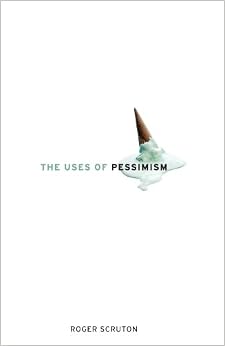
The Uses of Pessimism: And the Danger of False Hope

Ebook Download The Uses of Pessimism: And the Danger of False Hope
The Uses Of Pessimism: And The Danger Of False Hope When creating can transform your life, when creating can improve you by offering much cash, why don't you try it? Are you still really baffled of where understanding? Do you still have no idea with what you are visiting write? Currently, you will require reading The Uses Of Pessimism: And The Danger Of False Hope A good writer is a good user simultaneously. You can define exactly how you compose depending upon exactly what publications to review. This The Uses Of Pessimism: And The Danger Of False Hope can aid you to solve the problem. It can be one of the best resources to create your creating ability.
By just linking to the net and find the link that we always supply in every web page, you can subsequent the book to obtain. They remain in the soft documents programs. Currently, we will certainly present you The Uses Of Pessimism: And The Danger Of False Hope as an analysis publication today. We are truly sure that this book will be really meaningful for you and individuals around you. As lots of people in various other places, they have actually taken this publication as their analysis collection. So, we suggest to you to obtain also this book.
Being popular for a book will make the name as well as content of guide is additionally relied on. The Appeal of this book is also stabilized with the materials and also every little thing informed and also explained. When you require something trusted, The Uses Of Pessimism: And The Danger Of False Hope holds good method to select. You may feel that this book will certainly be difficult to check out as well as recognize. Why? Appeal is typically for the large publication that comes with hard creating designs.
To get the book to check out, as exactly what your buddies do, you should visit the link of the book web page in this web site. The web link will show how you will certainly obtain the The Uses Of Pessimism: And The Danger Of False Hope However, the book in soft documents will certainly be additionally easy to review every time. You could take it right into the gadget or computer unit. So, you can really feel so easy to overcome exactly what telephone call as fantastic analysis experience.
Review
"While some of Scruton's conclusions may be controversial... he does present an intriguing case for using pessimism as a way to examine issues that affect current society. His clear and accessible writing will appeal to those familiar with the author's past works and also those with an interest in philosophy."--Scott Duimstra, Library Journal "Scruton has approached his project with incisiveness, breadth of knowledge, and clarity of expression. The Uses of Pessimism is worth arguing over."-- Peter Lopatin, Commentary"Score one for pessimism."--Peter Monaghan, The Chronicle of Higher Education Praise for Roger Scruton "Both left and right should be grateful to have such a man to sharpen and define the issues. And philosophers should be grateful that he has placed their subject at the very centre of current affairs. Perhaps Scruton's greatest contribution is his living demonstration of the truth that without philosophy we are nothing."--Bryan Appleyard, The Sunday Times"Scruton . . . is a learned, witty, wide-ranging, prolific, and often dazzling writer."--The Weekly Standard"A practiced and elegant writer."--The Independent"Dr. Scruton writes with an unusual clarity and fluency, and is always a pleasure to read."--Times Education Supplement
Read more
About the Author
Roger Scruton is Resident Fellow at the American Enterprise Institute, and Visiting Professor of Philosophy at Oxford University. He is the author of more than 30 books, including Beauty and Death-Devoted Heart: Sex and the Sacred in Wagner's Tristan and Isolde.
Read more
Product details
Paperback: 240 pages
Publisher: Oxford University Press; 1 edition (March 1, 2013)
Language: English
ISBN-10: 0199968977
ISBN-13: 978-0199968978
Product Dimensions:
7.8 x 0.5 x 4.9 inches
Shipping Weight: 8.8 ounces (View shipping rates and policies)
Average Customer Review:
4.4 out of 5 stars
21 customer reviews
Amazon Best Sellers Rank:
#617,789 in Books (See Top 100 in Books)
The Uses of Pessimism is a wonderful little book, one of Roger Scruton’s best. Its terms, however, are a tad imprecise. He contrasts optimism with pessimism but then must add qualifying adjectives. What he is actually talking about is the conflict between utopian leftism and worldly-wise conservatism. On the one hand we have those who believe they have uncovered a grand new solution to our problems, one that will efface the past and bring us to a brightly-lit future. Unfortunately, we might have to break a few eggs to create that omelette, but we are prepared for the violence that intrinsically accompanies radical, positive change. On the other hand there are the individuals who have read and internalized their Burke and see civilization as an evolutionary product of law, conventions, mores, compromises and local customs.While the revolutionary must suddenly recreate all of human experience and establish state controls over millions and millions of human transactions, the market-driven economist benefits from the trillions of transactions that have created modern commerce and social organization. Fundamentally, Scruton is talking about an abstract, ‘new’ world view that privileges the “I†and an established world view that privileges the “We.†He is talking about ‘tribal’ societies that rely on kinship and the desperation (and resulting forms of dominance) that accompany survivalism vs. the society that is, literally, settled. Historically, he is tracing the transition from tribal society to agricultural society, the pivotal, most important process in human history, one in which strangers find ways of settling with one another (physically, legally, morally, psychologically) and evolve practices and processes which, in their totality, constitute civilization.In charting this larger pattern he looks at a series of fallacies that undergird the leftist/utopian vision. One, for example, is the zero sum game fallacy that argues for ‘equality’ but assumes that for every one person’s gain there is another person’s loss. Rather than attempting to foster common success, we get redistribution that will somehow bring ‘justice’ by restoring equilibrium to a system. Churchill’s and Samuel Johnson’s famous responses to this process are that everyone will be dragged down to a lower level. RS’s personal take on this particular fallacy is related to the current debate on charter (and other) schools. He points out that the local grammar school which he attended at High Wycombe set out as its task the goal of replicating the curricula and expectations of the grand British public schools. The result was that it produced a number of Cambridge fellows second only to Eton in its numbers. (Parenthetically, this is what we should have done rather than dumbed down all of American education; we should have demanded that the schooling previously available only to elites would now be available to all.)While the book feels like an analysis of the errors of socialism and the recent, intellectual currents which have used obscurantism and an attack on traditional learning (there is no such thing as meaning, no such things as facts) to reinstate a socialism whose violent failings have prevented direct and honest defenses, the book actually ends with a very trenchant analysis of Islamic radicalism and the manner in which it fits the preestablished template. This is very shrewd and subtle as well as pressing, urgent and contemporary.Bottom line: this is a must read, one of RS’s sleepers, a small book which draws together a great deal of learning to make a series of points whose importance and relevance have never been more compelling.
I was so impressed with this book, recommended to me by a Temple University professor, that I have since bought several copies to send to friends in the economic, legal, and political fields. Professor Scruton goes very deep in explaining the dangers of assuming that the best case scenario justifies experimentation in social affairs. He explains the wisdom of giving settle custom our highest attention. There are very good reasons that settled society, as opposed to blood societies, have agreed upon certain customs that allow diverse people to live in harmony, even if not friendship. His devastating exposure of the folly of the European Union should be read by all those self-assured Europhiles, who think that the nation-state can be abolished and a centralized, non-democratic, planned state from Brussels will cure all future ills. The people of Europe need to look at what the EU actually does rather than what its adherents say is its goal, as if stating a goal is the same thing as accomplishing a goal. Professor Scruton's explanation of the real danger from radical Islam is chilling. Radical Islam has no goal that can be negotiated. It wants a submissive society rather than a cooperative one, which has been the achievement of the West that required centuries of sacrifice. Now those who admire "diversity" are unwilling to see that Radical Islam will brook no diversity, only submission or death. But don't take my word for it; read the book; gift it to others; debate it.
This book is the most lucid treatment of its subject matter that I have ever read. Of course, "pessimism," as Scruton uses the term, doesn't necessarily mean being negative. Instead, it refers to a sober, realistic outlook in the light of the hard truths of existence, yet in a manner that does not exclude hope. Its humanity, its rootedness in reality, and its stance against utopian thinking that inevitably becomes coercive and destructive, make Scruton's work a genuine treasure.
This is the book everyone must read. It is not only a lecture about various ideas of pessimism as opposed to excessive or moderate optimism which often contaminates human thinking but a warning against man's inclination to adopt blindly the sense of "false hope" of which one does not know unless one practises is. Such idea as communism which has always been the most ominous utopia, despite the name (communio, commonwealth, is there anything like that in the world?) is thoroughly and intelligently discussed in the book in the way which those who are familiar with world politics will understand. I highly recommend the part (chapter) in which R.Scruton writes about the mechanisms aginst the defence of truth; it is a very good account of how we try to avoid seeking truth in contemporary world. The book explains why people prefer cheating themselves by recoursing to numerous utopias and the consequences of such an approach. In other words, utopia is shown as one of the "dangers of false hope". The book to be read by all of us, not only those who live in post-communist countries.
According to Scruton, the world is harmed not by pessimists (though he does not tolerate unbridled pessimism) but rather by unbridled optimists, people who believe in their fallacious ideas so fervently that nothing can dissuade them. True believers. Scruton, realizing that those folks would not hear his argument even if they read it, makes the case so that those of us who are prudent pessimists can recognize the optimists' tactics and understand better the importance of our pessimism.At just over 230 pages, this is a quick read and the language is not lofty, so potential readers shouldn't be too nervous about picking up the book. I think the book is so important that I may well buy several copies for friends and family.
The Uses of Pessimism: And the Danger of False Hope PDF
The Uses of Pessimism: And the Danger of False Hope EPub
The Uses of Pessimism: And the Danger of False Hope Doc
The Uses of Pessimism: And the Danger of False Hope iBooks
The Uses of Pessimism: And the Danger of False Hope rtf
The Uses of Pessimism: And the Danger of False Hope Mobipocket
The Uses of Pessimism: And the Danger of False Hope Kindle

Tidak ada komentar:
Posting Komentar